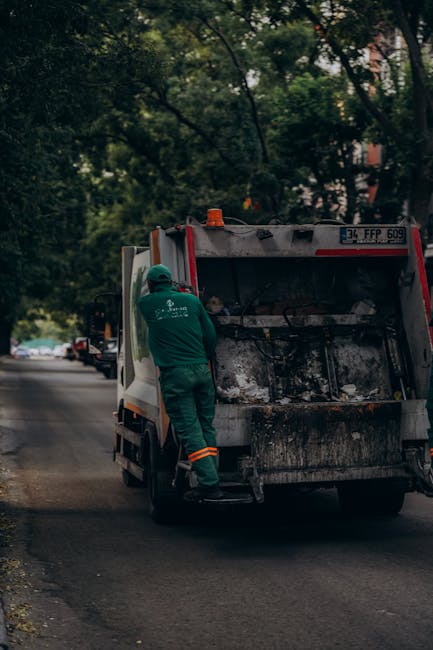
Avoid hidden fees in Palmers Green rubbish removal quotes

If you are comparing rubbish removal quotes in Palmers Green, the headline price can look fine at first glance, then somehow grow legs. A "cheap" quote turns into a bigger bill once loading, labour, disposal, parking, access, or minimum charges appear. That is exactly why learning how to avoid hidden fees in Palmers Green rubbish removal quotes matters before you book. It protects your budget, saves awkward phone calls later, and helps you choose a service that feels straightforward from the start.
Truth be told, most people do not mind paying for a proper job. What they do mind is feeling nudged into extras that were never made clear. In a busy area like Palmers Green, with flats, tight streets, and awkward access in places, the details matter. The good news? Once you know what to ask, the pricing picture gets much clearer.
This guide walks you through the common fee traps, how honest quotes are usually structured, what to check before you agree to anything, and how to compare providers without getting lost in sales talk. By the end, you should be able to spot a clean quote from a fuzzy one pretty quickly.
- Why hidden fees matter
- How rubbish removal quotes are built
- Key benefits of transparent pricing
- Who needs this and when it helps
- Step-by-step guidance
- Expert tips for better results
- Common mistakes to avoid
- Tools, resources and recommendations
- Law, compliance and best practice
- Options and comparison
- Real-world example
- Practical checklist
- Conclusion
- Frequently asked questions
Why Avoid hidden fees in Palmers Green rubbish removal quotes Matters
Hidden fees do not just affect the final bill. They affect trust. If a quote sounds simple but the invoice arrives with surprise add-ons, it can leave you feeling like you have been sold one thing and charged for another. Not ideal, especially when you are already trying to clear a home, empty a garage, or get rid of builders' waste before the weekend.
In Palmers Green, pricing can shift because of the practical realities of the job. A first-floor flat with no lift is different from a driveway collection. A pile of mixed household waste is different from a few bulky items placed neatly by the door. And if a van cannot stop right outside, labour time can increase. Fair enough, that is part of real-world pricing. The problem starts when those factors are not explained before booking.
There is also a bigger reason this matters: comparing rubbish removal quotes becomes almost impossible if every company measures the job differently. One provider may include labour and disposal in the headline price. Another may not. One may charge by volume. Another may add fees for heavy lifting, access issues, or specific items. Without clarity, you are comparing apples with oranges, and nobody enjoys that game.
For local households, landlords, and small businesses, transparent pricing means fewer delays, less stress, and better planning. If you know the likely total early on, you can decide whether to book now, split the job into stages, or combine it with another clearance such as house clearance or garage clearance.
Key takeaway: the cheapest quote is not always the best value. The best quote is the one that explains what is included, what might change, and when extra charges can apply.
How Avoid hidden fees in Palmers Green rubbish removal quotes Works
A clear rubbish removal quote usually starts with a description of the waste, the location, and the access conditions. From there, the company estimates labour, vehicle use, disposal costs, and any special handling. If the quote is honest, those pieces are either included or clearly listed as optional extras. Simple in theory. A bit messier in practice.
Here is what should normally be checked before you accept a quote:
- Volume or weight basis: some firms quote by load size, others by weight, and some use a mix of both.
- Labour: is carrying items from upstairs or from inside the property included?
- Access: does difficult access, stairs, narrow hallways, or distance from the van affect the price?
- Item type: are mattresses, fridges, sofas, or hazardous items treated differently?
- Disposal charges: are tipping fees included, or added later?
- Parking and waiting time: if parking is tight in Palmers Green, who covers that cost?
- Minimum charge: is there a base fee even for a small load?
The cleanest quotes tend to use plain language. For example, a provider might say the price includes collection, loading, transport, and standard disposal for one load, with extra charges only if the waste type or access changes. That is much easier to understand than a vague "from GBPX" line with no explanation. Let's face it, "from" can sometimes do a lot of heavy lifting.
It also helps to ask how the quote will be confirmed. Will you get it in writing? By email? Through an online booking form? Written confirmation matters because it reduces misunderstandings if the job changes on the day. If you are booking through a provider's online booking process, make sure the details you enter match the actual waste, not the version you hope it is after a quick tidy-up.
Key Benefits and Practical Advantages
Avoiding hidden fees is not only about saving money, although that is the obvious upside. It also makes the whole process feel calmer and more manageable. And if you have ever stared at a room full of old furniture thinking, "Right, where do I even start?" you will know calm has value too.
- Better budgeting: you can plan the full cost before collection day.
- Less stress: no last-minute arguments over "unexpected" extras.
- Faster decisions: comparing providers gets easier when the pricing format is clear.
- Fewer delays: clear quotes reduce back-and-forth before collection.
- More trust: transparent pricing often reflects a more organised service overall.
There is another practical advantage that gets overlooked. Transparent pricing can help you choose the right service level. For instance, if the job is mainly a few bulky items, a specialist option like furniture disposal may be more suitable than a broad, catch-all arrangement. If you have mixed household clutter, a broader waste removal service might be the better fit.
That match between service and job matters. Paying for a larger clearance than you need is not a hidden fee, strictly speaking, but it still drains value. On the other hand, choosing a service that is too narrow can create a mismatch on the day and lead to add-on charges. No one wants that.
Who This Is For and When It Makes Sense
This matters for more people than you might think. If you are a homeowner clearing out clutter, a tenant trying to leave a property tidy, a landlord preparing for new occupants, or a local business dealing with office waste, hidden fees can catch you out in similar ways.
It makes particular sense to be extra careful if any of these apply:
- You have never used a rubbish removal service before.
- You are clearing items from upstairs rooms, basements, or a flat without lift access.
- You have mixed waste, not just one type of item.
- You are disposing of bulky items like wardrobes, mattresses, appliances, or old office furniture.
- You need the collection on a tight schedule, which can make you less likely to question the quote.
That last one is important. When time is short, people sometimes say yes too quickly. Understandable, of course. But a rushed yes can be an expensive one. If you are dealing with business waste, it can also help to review a dedicated business waste removal option so you know exactly what is included for commercial collections.
For households, an honest quote can be especially useful when the job is emotionally loaded. Clearing a relative's home, for example, is rarely just about waste. It is about sorting, decision-making, and sometimes a bit of nostalgia mixed with dust. In those situations, a clean price structure matters because you already have enough on your plate.
Step-by-Step Guidance
If you want to avoid hidden charges, follow a simple process rather than guessing. That approach works better than relying on vague price promises or website banners that look cheerful but say very little.
- List the waste clearly. Note what you need removed, how much there is, and whether anything is heavy, fragile, or awkward.
- Photograph the load. A few clear photos often help the provider estimate more accurately. Take one from a distance and one close up. A quick photo by the bin or doorway can help too.
- Describe access honestly. Mention stairs, narrow halls, parking issues, gates, or restricted entry. If the van cannot park nearby, say so.
- Ask what the quote includes. Labour, loading, disposal, fuel, and VAT if applicable should be clearly covered or clearly excluded.
- Ask what triggers extra charges. This is the big one. Ask directly: what would change the price on the day?
- Request written confirmation. Keep a record of the agreed price and any conditions.
- Check item-specific pricing. Appliances, mattresses, and sofas can sometimes have separate handling rules.
- Compare like for like. Do not compare a vague estimate with a fully inclusive quote and call them equal. They are not equal.
One useful habit is to use the same wording with every provider. That way, you get comparable responses instead of different versions of the same job. For example: "Please quote for collection, loading, transport, disposal, and any likely extras based on these photos." Plain and calm. No drama required.
And if the provider avoids direct answers? That is itself information.
Expert Tips for Better Results
In our experience, the best way to keep quotes honest is to remove ambiguity before booking. Most fee surprises happen where details are missing, not because every company is trying to be clever. That distinction matters.
Ask for an all-in price where possible
"All-in" is not a magical phrase, but it is useful. It pushes the conversation toward the final likely cost rather than a low teaser rate. If the service cannot give a full all-in figure, ask for a clear breakdown instead.
Be very specific about heavy items
A piano is not a bedside table. A fridge is not a bag of mixed light rubbish. Heavy or awkward items may need more labour or specialist handling, and that should be discussed upfront. If you have appliances, a dedicated fridge and appliance removal service can make the pricing clearer from the outset.
Check whether parking or congestion could be charged back
In a local area, parking can be a small but annoying detail. If the service expects a certain parking arrangement, ask who pays if that arrangement changes. It sounds fussy. It is not. It is practical.
Ask about recycling and disposal routes
Transparent companies usually explain how waste is sorted, reused, or recycled. That does not always change the price, but it does tell you something about the service's standards. If sustainability matters to you, you may also want to look at a provider's recycling and sustainability approach.
Do not hide the awkward bits
If there is a bit of extra rubbish tucked behind the shed, say so. If the loft access is cramped, mention it. Small surprises turn into pricing surprises very quickly. A five-minute honest conversation can save a thirty-minute argument later. Nobody wants that on a Thursday afternoon while the kettle is boiling and the hallway is full of bags.
Common Mistakes to Avoid
Some mistakes are tiny. Some are expensive. Most are avoidable if you slow down just enough to ask the right questions.
- Accepting the first number you hear: quick decisions can be costly when the quote is only a starting point.
- Ignoring access details: stairs, distance, and parking can affect the real price more than people expect.
- Comparing mismatched quotes: if one includes labour and disposal but another does not, the comparison is not fair.
- Forgetting item restrictions: some waste streams need special handling. Hazardous materials are a different conversation entirely.
- Not asking about minimum charges: small jobs can still have a base fee.
- Assuming "cheap" means simple: a low teaser price can be built on extras you will only discover later.
A surprisingly common mistake is under-describing the job because people do not want the price to go up. Ironically, that usually has the opposite effect. A fair quote needs fair information. If you are clearing a mixed load, be upfront. If there are odd items, say so. The quote may rise a little, but at least it rises before the van arrives, not after.
Another one: not reading the terms. Not exactly thrilling bedtime reading, I know. Still, the small print often explains the conditions under which a quoted price can change. If something is unclear, ask before booking.
Tools, Resources and Recommendations
You do not need a complicated toolkit to make better decisions, just a sensible process and a few practical habits.
- Photos on your phone: take clear pictures of the items, access route, and any tight corners.
- A simple waste list: write down items in plain English. "Two sofas, one mattress, four bags, broken shelf" is often enough.
- Measurement notes: rough dimensions can help when dealing with bulky furniture or appliances.
- Email or written message: keep the quote in writing where possible.
- A comparison table: compare what is included, not just the headline number.
If you are unsure how to frame the job, the site's pricing pages can be useful starting points, especially pricing and quotes. For broader services that involve more than a few items, it may also help to look at home clearance or flat clearance depending on your property type.
There is also a good case for checking operational details like insurance and safety and the company's health and safety policy. These pages do not just tick boxes. They tell you how carefully the business works, which often goes hand in hand with clearer pricing. Not always, but often.
Law, Compliance, Standards, or Best Practice
Waste collection and disposal sit inside a regulated environment in the UK, so it is sensible to treat compliance seriously. You do not need to become a legal expert to book a collection, but you should expect the provider to operate properly and handle waste responsibly.
In plain terms, best practice means the company should be able to explain how waste is collected, transported, sorted, and disposed of. If special items are involved, there should be a sensible process for dealing with them. For business customers, confidentiality may also matter, which is why services such as confidential shredding can be relevant when paperwork, files, or sensitive material are part of the clear-out.
Hazardous waste is a separate category and should never be treated as ordinary rubbish. Paints, chemicals, certain electrical items, and other risky materials may need specialist handling. If your load includes anything that could be hazardous, ask directly rather than assuming it will be bundled into a standard quote. The same caution applies to mixed clearances with unknown contents in lofts, garages, or storage rooms.
Best practice also means transparency. A reputable provider should be willing to explain the basis of the quote, any exclusions, and any conditions that could change the price. If they cannot or will not do that, you are entitled to walk away. Simple as that.
For business users, additional policies such as terms and conditions and payment and security are worth checking before confirming a booking. The more clearly those details are set out, the easier it is to avoid awkward billing surprises later on.
Options, Methods, or Comparison Table
Different waste removal methods suit different jobs. The table below gives a straightforward comparison so you can see where hidden fees are most likely to creep in and where clarity matters most.
| Option | Best for | Where hidden fees can appear | What to check first |
|---|---|---|---|
| Standard rubbish removal | Mixed household or general waste | Labour, access, disposal, minimum charge | Whether loading and disposal are included |
| Furniture clearance | Sofas, wardrobes, tables, chairs | Heavy lifting, stair carry, item-specific handling | How large or bulky items are priced |
| Appliance removal | Fridges, washing machines, cookers | Special handling and transport conditions | Whether the appliance is disconnected and ready |
| Garden clearance | Green waste, branches, soil, outdoor clutter | Weight, bagging, access through house or side passage | How loose waste will be collected |
| Office or business waste | Desks, paperwork, equipment, stock waste | Commercial sorting, shredding, restricted items | Whether specialist disposal or shredding is needed |
If you are planning a bigger project, pairing the right service with the right waste stream is one of the easiest ways to keep costs sensible. For example, a cluttered attic may be better handled through loft clearance, while a business moving out of premises may need office clearance instead of a generic collection.
Case Study or Real-World Example
Here is a realistic scenario. A couple in Palmers Green needs to clear an old sofa, a mattress, several boxes of mixed household waste, and a broken cabinet from a second-floor flat. The first quote they receive sounds attractive because the price is low. But when they ask a few basic questions, the details become less tidy. Stairs are extra. Carry distance is extra. Disposal is separate. The final cost would have been much higher than the headline figure.
They then contact another provider and give the same information: photos, access notes, item list, and the fact that there is no lift. This time, the price is a little higher at the start, but the quote includes labour, transport, and disposal, with the conditions clearly set out in writing. Which feels better? Almost always the second one, because there are no awkward surprises waiting around the corner.
This kind of situation comes up all the time. A neat quote is not always the cheapest quote, but it is often the easier one to live with. And honestly, ease matters. When you are juggling a flat move, a family schedule, or a deadline from a landlord, the last thing you need is a mystery invoice.
A small side note: one of the best signs of a fair quote is when the provider asks sensible follow-up questions. That is usually a good thing, not a nuisance. It means they are trying to price the job properly instead of winging it.
Practical Checklist
Use this checklist before you confirm any rubbish removal booking in Palmers Green. It takes only a few minutes, and those minutes can save you a fair bit of money and hassle.
- Have I listed everything that needs removing?
- Have I sent clear photos of the waste and access route?
- Have I explained stairs, parking, and distance from the van?
- Do I know whether labour and disposal are included?
- Have I asked what counts as an extra charge?
- Do I know whether any items need specialist handling?
- Have I got the quote in writing?
- Am I comparing like-for-like quotes rather than loose estimates?
- Have I checked the provider's service details for the type of clearance I need?
- Do I feel comfortable with the explanation, not just the price?
If you can answer yes to most of those questions, you are in a much stronger position. That is the real goal here: not just a lower number, but a clearer decision. And clarity is worth something.
Conclusion
To avoid hidden fees in Palmers Green rubbish removal quotes, focus on clarity, not speed. Ask what is included, what could change, and how the service prices access, item type, and disposal. Keep the conversation specific, get the agreement in writing, and compare quotes on the same basis. It sounds simple, because really, it should be.
When you take a calm, informed approach, you are far less likely to get caught out by vague pricing or last-minute add-ons. You also make it easier to choose a provider that feels professional from the first message through to the final sweep of the driveway. A tidy quote often leads to a tidier experience. Not always, but enough to matter.
Get a free quote today and see how much you can save.
And if you are still weighing things up, that is perfectly fine. A good decision does not need to be rushed. It just needs to be clear.
Frequently Asked Questions
How do I spot hidden fees in a rubbish removal quote?
Look for vague language, missing labour details, unclear disposal charges, and any mention of extras that are not explained properly. If a provider cannot tell you what is included, that is usually a warning sign. Ask for the quote in writing and compare it with another detailed quote.
What should a transparent rubbish removal quote include?
A transparent quote should explain the waste type, the amount being removed, labour, loading, transport, disposal, and any likely extra charges. If access is tricky or items are bulky, those points should be addressed before collection day. The more specific the quote, the better.
Are low "from" prices usually misleading?
Not always, but they can be. A "from" price may be based on ideal conditions, light waste, easy access, and no extras. If your job is more complex, the real cost can be higher. Use "from" prices as a starting point, not a final answer.
Do staircases and flat access affect rubbish removal costs?
Yes, they often do. Carrying items down stairs or through narrow communal areas can increase labour time and effort. If you live in a flat in Palmers Green, mention that early, especially if there is no lift or parking is tight.
Can I get an accurate quote from photos alone?
Often, yes, especially if the photos are clear and include the access route. A good provider may still ask follow-up questions. Photos help a lot, but they work best alongside a written description of what needs removing.
Why does item type matter so much?
Because not all waste is treated the same way. Sofas, mattresses, fridges, electricals, and hazardous items may require different handling or disposal processes. Even if two loads look similar in size, they may not cost the same to collect.
Is it better to choose the cheapest quote?
Usually not on price alone. The cheapest quote can become expensive if extras appear later. A better approach is to compare what is actually included and choose the quote that gives the clearest total value. Cheap and clear is ideal. Cheap and vague, not so much.
What if the final load is slightly different on the day?
Small changes happen. A reputable provider should explain whether the price may change and how they will handle that. If the extra items are minor, the adjustment may also be minor. The key is that the rules should be agreed in advance.
Do business waste quotes work differently from household quotes?
They can. Business waste may involve office furniture, confidential paperwork, or larger volumes, and that can affect pricing. If you are clearing a workplace, a dedicated commercial service is often clearer than a general household quote.
Should I worry about disposal and recycling details?
Yes, in a sensible way. You do not need to micromanage the process, but you should know that the provider has a proper disposal route. It is a good sign when a company can explain how it handles recycling and sustainability.
What is the safest way to get a fair quote quickly?
Send clear photos, explain access honestly, list the items, and ask for an all-in figure or a clear breakdown. That gives the provider enough information to price the job properly without guesswork. Quick, but not rushed. There is a difference.
What if I am still unsure whether a quote is honest?
Ask one more direct question: "What exactly could make this price change?" A trustworthy provider should answer that plainly. If the reply stays vague, you probably have your answer already. Better to pause than to agree to something unclear.